Sunday, October 28, 2012

Saturday, October 27, 2012
Blog Post #9
Mr. McClung's World
Volume 4 Post (2011-2012)
For over four years now Mr. Joe McClung has kept interesting blog about his classroom during his first years to teaching. In this blog post he recaps what he has learned in the past year during his fourth year of teaching. In his latest blog post he gives us two tips on which to focus on: you gotta dance with you you brought to the dance and challenging yourself. In Joe's first tip he explains that you should always remember that having fun in your classroom is more important then the reflection of your peer's. In his second tip he explains that as a teacher you should never stop learning new things and expanding the creativity of your students. His goal is to never become lazy and maintaining his will to present his class with exciting material.
 Every part of his 4th post rings true to my desire to become a elementary teach, and always remembering that having fun in the classroom is my prime objective. I remember too many experiences as a learner sitting in a desk unfocused in class because my teacher did not want to have fun, and thought that learning shouldn't be fun either. To a certain degree, I will always remember that the children in the classroom are much more important then gaining the satisfaction of my peers; simply because I'm here to make an impression on the children's lives, not on my peers'.
Volume 3 Post
Mr. McClung is back, well technically he wrote this before the post above. Nevertheless!! An equally beguiling post defining the lessons he learned in his third year as an educator. This post gives us four tips to remember as we enter our careers as guides of academia including:
1. Know Who Your Boss Is
Many times I remember feeling as though I was not the important part of the classroom. Instead, the teacher was too worried about the principal's reactions to her teaching or the organization she was displaying. He reminds us to always remember that we chose this profession to make an impact on the lives of our students and not on the lives of our administration.
As an educator we must always remember that the children's point of view is just as important as our own. We may see a child in the corner on Facebook mumbling to themselves in emotional tone, but they may see a nerdy person in the front of the class with freakish interpersonal skills.
3. Don't be Afraid to be an Outsider

4. Don't Touch The Keyboard
This is a term Joe picked up from his mentor in the faculty who worked for an airline training center. He applies the principle to his classroom by allowing the student to struggle on their own in the beginning because it will allow them to excel in the endgame. Resist the urge to do the work for the student, and instead allow them the opportunity to fail so that they can learn to complete the task correctly on their own.
5. Don't Get Comfortable
"The biggest fear a teacher should have is becoming comfortable"
As Mr. McClung moved into his second year teaching at a new school he felt it was much easier to complete his teaching duties. He felt comfortable in his new groove and complacency was beginning to set in. To combat this new stagnant feeling he found himself joining clubs he would never have before and enjoying activities that were alien to him. We must be "movers and shakers" in our schools and challenge ourselves everyday to benefit ourselves and our student body.
Thursday, October 25, 2012
Project #10 Personal Learning Network
First Progress Report
As I let the moral of this class begin to sink in, I have began to create a method of keeping track of all the information I will like to use as a future educator. The easiest, most productive way I have found to do so is through Symbaloo. Although, it is not enough to simply create a foundation for this structure of knowledge. I have started to create a host of different multimedia experts, highly advanced educators, technology field icons, expanding websites, and many other facets of education. The great thing about using a PLN is no matter how big or small the need is to follow the publisher, every thing has a place. I use the Twitter feeds and blogs from teachers I have been assigned through my EDM310 class to provide a base for my professional attache'. Then, I have assembled several types of networking websites, such as Delicious and Edmodo, to expand myself to the ideas and skills of peers. I know that my PLN will change daily and I am ready to utilize the infinite knowledge of the world.
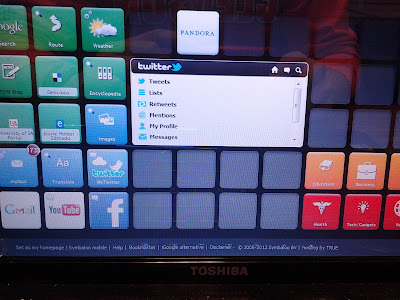
As I let the moral of this class begin to sink in, I have began to create a method of keeping track of all the information I will like to use as a future educator. The easiest, most productive way I have found to do so is through Symbaloo. Although, it is not enough to simply create a foundation for this structure of knowledge. I have started to create a host of different multimedia experts, highly advanced educators, technology field icons, expanding websites, and many other facets of education. The great thing about using a PLN is no matter how big or small the need is to follow the publisher, every thing has a place. I use the Twitter feeds and blogs from teachers I have been assigned through my EDM310 class to provide a base for my professional attache'. Then, I have assembled several types of networking websites, such as Delicious and Edmodo, to expand myself to the ideas and skills of peers. I know that my PLN will change daily and I am ready to utilize the infinite knowledge of the world.

Thursday, October 18, 2012
Blog Post #8
....How We Dream
Dr. Richard Miller, from Rutgers University, delivers a lecture about the changes occurring in human communication. He explains the beginning of his fascination as a child with written prose, even describing himself as "a person of the book". Dr. Miller has since been teaching for 16 years at Rutgers, and during his time there he has witnessed the fundamental and incremental affects the web has levied on restrictions for gathering, displaying, editing, or even processing information.
Timeline of Internet History
I am challenged now by students who are not even born yet. How can I be a guide for children when I can't see the digital path? This class has opened my eyes to a world beyond recreational computer use. I can collaborate with peers from across the globe in the blink of an eye. Through programs like Symbaloo, MindMeister, UTorrent, Blogger, diigo, Vimeo, dotSUB, etc. I can help students become an educated digital citizen. I will know the tools that students need to become successful in the classroom whether it's with multimedia or with a pencil.
Carly Pugh's Blog Post
When I arrived on Carly's blog I immediately noticed how colorful it was (so, I had to adjust mine accordingly for the sake of competitiveness). Dr. Miller spoke a great deal about the differences between a written text and its digital predecessor. She followed the topic set forth by Miller by using multimedia as a tool of academic expression. The first thing that came to mind was my ability to stay focused and energetic about reading the material on Carly's page. It is not one-dimensional, it is multidimensional. I am directed to webpage, after video, after blog that is all part of a collaborative essence. She inspired me to think differently and diversify!
EDM 310 is Different
The Death of Education -into- The Dawn of Learning
The U.S. Dept of Commerce ranked education below coal mining in a study done for technology intensiveness. As an educator technology is no longer a choice, it has unveiled a new environment. These children live in a different space now, and that space is ideal for learning. My generation and the ones before me have been born into an era of testing, testing, and more testing so that we can learn to access the information that only we have the capability to possess. That is the argument made in Learn to Change. Information has a different model than what we are used to seeing, and children need to be taught how to synthesize, adapt, discover, collaborate with it, problem solve with it, and not memorizing a literacy. I couldn't agree more with the speakers, and the belief that this system of educating our children must slowly fade away to something much bolder and brighter than anything before.
Scavenger Hunt
1. I used Makebeliefescomix to create my own comic strip. There is no embed code so you must go to the webpage it was created at. This tool is used for educators all over the world (you can even write in other languages) to throw a fun spin on a lesson they may be creating or even something they can put on their classroom wall to show proper etiquette.
2. I found a very useful site for younger students to create animated movies. The site is called Kerpoof and you are able to create scenes of selected backgrounds and characters. You can control what and when they say things. Also, you can even control the environment around your characters. Go to this link to watch my video!
3. I created a poll using Polldaddy. It was free and very simple to use. Take my poll now!
Wednesday, October 17, 2012
Comment For Teachers #2
Comment 2.1
In this first post Mrs. Kathleen Morris brought to light the possible "Death of PowerPoint", and whether or not it is still a viable source of presentation in the classroom. Discussed throughout the post was the students inability to use utilize the programs correctly and in reflection a tiring use of PowerPoint was occurring. She then outlines her beliefs on the subject and gives several examples of people who are ridiculing PPT but also individuals who are still saying that with proper usage the tool is effective. Then through an example in her own classroom Mrs. Morris had given a project to:
Research the natural disaster.
Create a model or representation of their natural disaster.
Create a PowerPoint to inform the audience about the disaster.
Present the PowerPoint using speaking notes, and present their model.
She had noticed that the students had developed a poor habit using PPT. The students were more interested in adding effects and colors than collecting and relaying the information to the viewers. Set out to correct this Mrs. Morris and her partner edited the assignment and instructed the students to:
My comments on Mrs. Morris' post were intuitive and substantive. I addressed the hope that PPT will survive and that through proper usage it can flourish in this time of booming media technology. I stated that several other very interesting forms of presentation like SlideRocket, Prezi, 280 Slides, Empressr, or even Google Earth do exist, but many students are unaware or unable to utilize these programs. Any student or professional armed with the ability to properly present information is an asset to any career they choose. It all starts in the classroom, and she is doing a great job of teaching these students how they can be valuable and successful in years to follow.
Comment 2.2
In Mrs. Morris' second post this month, Internet Safety Tips for Students, she gives educators several tips on safety when it comes to internet security in the classroom from a student's perspective. She shared several tips that every classroom guide can use when tasked with an assignment that requires the use of the internet. Morris alluded several times to the studies done by Susan McLean, a retired police officer and cyber safety expert, about the risks and dangers children face as a digital citizen. Among these tips between both Morris and McLean were:

Always ask an adult if you’re unsure of anything when you are online.
Don’t sign up for sites that are 13+ if you are not old enough (Facebook, YouTube, Instagram etc).
Remember YAPPY (the personal information you should not share online) – Your full name, address, phone number, passwords, your plans.
Don’t add people as online friends unless you know them in real life or have parent permission. Never arrange to meet an online friend without talking to a parent.
Remember that you cannot believe everything you read on the internet and you can’t trust everything online friends tell you.
Choose sensible names for usernames, email addresses etc.
Talk to your parents about what you’re doing online and let them know when you’re going on the internet.
Know what cyber bullying is and tell someone if you think it’s happening to you. Cyber bullying is when someone picks on you, annoys, embarrasses, or threatens you over and over again using technology, such as the internet or a phone.
Protect your digital footprint: don’t put anything online that you wouldn’t want all your friends, family, teachers and future employers to see.
Treat others online the way you’d like to be treated.
All of these tips are extremely valuable, but I particularly felt that the third tip she shared is the most important one. I will keep these tips close at hand when I have my own classroom, and hopefully the students will remember these rules throughout their digital citizenship.
My comments for this blog post were short and sweet. I thanked her for the great tips she shared for students using the internet, as well as the videos that were aired on public television in the UK to prevent these cyber crimes. To watch one of the videos, click here. I also commented on my hopes to see a post in the future geared towards parent's and teacher's roles in cyber protection.
In this first post Mrs. Kathleen Morris brought to light the possible "Death of PowerPoint", and whether or not it is still a viable source of presentation in the classroom. Discussed throughout the post was the students inability to use utilize the programs correctly and in reflection a tiring use of PowerPoint was occurring. She then outlines her beliefs on the subject and gives several examples of people who are ridiculing PPT but also individuals who are still saying that with proper usage the tool is effective. Then through an example in her own classroom Mrs. Morris had given a project to:
She had noticed that the students had developed a poor habit using PPT. The students were more interested in adding effects and colors than collecting and relaying the information to the viewers. Set out to correct this Mrs. Morris and her partner edited the assignment and instructed the students to:
- Begin by dividing their topic into sub categories and work out theoverview of their presentation.
- Research by using books and credible internet sources.
- Use resources that they understand, put the information in their own words and include a reference section in their PowerPoint.
- Create a PowerPoint that focusses on using text that was no more than titles/key words.
- Source, attribute and use Creative Commons images.
- Create speaking notes to support their presentation.
- Engage and teach the audience by presenting their model of the natural disaster.
My comments on Mrs. Morris' post were intuitive and substantive. I addressed the hope that PPT will survive and that through proper usage it can flourish in this time of booming media technology. I stated that several other very interesting forms of presentation like SlideRocket, Prezi, 280 Slides, Empressr, or even Google Earth do exist, but many students are unaware or unable to utilize these programs. Any student or professional armed with the ability to properly present information is an asset to any career they choose. It all starts in the classroom, and she is doing a great job of teaching these students how they can be valuable and successful in years to follow.
Comment 2.2
In Mrs. Morris' second post this month, Internet Safety Tips for Students, she gives educators several tips on safety when it comes to internet security in the classroom from a student's perspective. She shared several tips that every classroom guide can use when tasked with an assignment that requires the use of the internet. Morris alluded several times to the studies done by Susan McLean, a retired police officer and cyber safety expert, about the risks and dangers children face as a digital citizen. Among these tips between both Morris and McLean were:

All of these tips are extremely valuable, but I particularly felt that the third tip she shared is the most important one. I will keep these tips close at hand when I have my own classroom, and hopefully the students will remember these rules throughout their digital citizenship.
My comments for this blog post were short and sweet. I thanked her for the great tips she shared for students using the internet, as well as the videos that were aired on public television in the UK to prevent these cyber crimes. To watch one of the videos, click here. I also commented on my hopes to see a post in the future geared towards parent's and teacher's roles in cyber protection.
Tuesday, October 9, 2012
Blog Post #7
The Networked Classroom Experience
As a new era dawns in the realm of education I do realize that my role in a classroom is perpetually changing. The tools that we will use are not as important as the connections that will be created by them. In the video below the narrator provides us with an example of an actual classroom using this networked agenda.
 Our role as a teacher is changing, along with our name. We will become learning architects, modelers, synthesizers, change agents, network sherpas, or even connected learning incubators. The creation of a network of learning infinitely larger than a classroom and easier to connect than independent students. Our role will be to facilitate an environment that shapes connectivism or a guide into scavenger hunts of mountains of information. The guide will show the student how to use the correct information in the appropriate way so that organization and connectivity flow into their everyday life. So, when our students discover this "pearl of information" they will know exactly how to treasure it. The future of the classroom is not one of individual learning but the development of collaborative instinct as our students not only impact the learning they completed that day but have affected students everywhere will complete tomorrow. Then, as the student leaves our classroom we do not hand the torch to another educator, but instead teach the student to utilize the tools they have learned in our classroom to synthesize and research information more accurately in the years to come.
As a new era dawns in the realm of education I do realize that my role in a classroom is perpetually changing. The tools that we will use are not as important as the connections that will be created by them. In the video below the narrator provides us with an example of an actual classroom using this networked agenda.
 Our role as a teacher is changing, along with our name. We will become learning architects, modelers, synthesizers, change agents, network sherpas, or even connected learning incubators. The creation of a network of learning infinitely larger than a classroom and easier to connect than independent students. Our role will be to facilitate an environment that shapes connectivism or a guide into scavenger hunts of mountains of information. The guide will show the student how to use the correct information in the appropriate way so that organization and connectivity flow into their everyday life. So, when our students discover this "pearl of information" they will know exactly how to treasure it. The future of the classroom is not one of individual learning but the development of collaborative instinct as our students not only impact the learning they completed that day but have affected students everywhere will complete tomorrow. Then, as the student leaves our classroom we do not hand the torch to another educator, but instead teach the student to utilize the tools they have learned in our classroom to synthesize and research information more accurately in the years to come.
The PLE of a 7th Grader vs. My PLN
Mrs. Drexler's second video I watched was of a 7th graders description of her own PLE. Utilizing Symbaloo to create her own tool for accessing anything on the internet. She created a social bookmarking account, posting of reports, reflections of class, collect information onto special note taking tools, and utilized this PLE in several other ways in just one day! She collaborated with scientists from in and out of this country and she did all of this on her own time. Responsibility was instilled in her through the freedom of agenda. I am very similar to this student in this particular way. Given a deadline and tools my work is of a much higher caliber because I have noted that a certain part of the assignment is responsibility itself. My PLN includes mastering social media along with the ability to collaborate with peers and leaders in the researched fields.
Sunday, October 7, 2012
Blog Post #6
Randy Pausch's Last Lecture
Every corner we turn in life there awaits new obstacles and successes. Dr. Randolph Pausch was diagnosed with cancer and told that he has only several months to live. An esteemed lecturer, he is giving his last lecture to the faculty and select students, but recorded for everyone to enjoy even after his passing. He gave this last lecture at the university on September 18,2007 in the McConomy Auditorium. He passed away July 25,2008. This last lecture about his lessons learned and advice for others on how to fully embrace and achieve those dreams will leave you in awe.


I, like millions of other viewers, am inspired by his last lecture. A great father, educator, and pioneer Dr. Pausch could captivate any audience, but his true passion was to inspire. As an educator I hope to develop several of Dr. Pausch's commendable characteristics, but his drive to inspire is my goal. Showing my students, through my own work in the classroom that, that success is exactly what you make of it. He loves his students most of all, but loves the work that they do in his life almost as much. Throughout my teaching/life experience I will attempt use many of Pausch's time management tips to create an environment in my classroom that will benefit every single student that leaves those doors.
Every corner we turn in life there awaits new obstacles and successes. Dr. Randolph Pausch was diagnosed with cancer and told that he has only several months to live. An esteemed lecturer, he is giving his last lecture to the faculty and select students, but recorded for everyone to enjoy even after his passing. He gave this last lecture at the university on September 18,2007 in the McConomy Auditorium. He passed away July 25,2008. This last lecture about his lessons learned and advice for others on how to fully embrace and achieve those dreams will leave you in awe.


Pausch speaks a great deal about his childhood especially during football games and practices. One practice in particular the coach forced him to work on "fundamentals". He reminded Pausch of how many people were in possession of the football at any given time, and it was the that approach that he became most familiar with the football field. To this day, he is still more comfortable on a football field than anywhere else. Also, teaching him that the more someone rode you the more they believed in you; that once they stop saying anything that means that they have given up.
He also gives lots of advice on how you should approach public speaking. Through several examples, from stuffed teddy bears to wild antics he painted a picture of how a lecture should be given. My favorite quote he said was "the inspiration and permission to dream is huge". Dr. Pausch also spoke in a great detail about brick walls and the reason they are there. He says they exist to make us prove exactly how badly we desire things and have a function to weed out the people who do not want it bad enough.
He speaks of the work he's done in the virtual reality realm as well as advancing his career, but also achieving his dreams he spoke of in the beginning of the lecture through the path he's chosen. Throughout that career he's always encouraging his students to have the most fun. He also thinks the people that done the most for him and the people will carry on his legacy. Yet, reminding us that these are the people that help us achieve our dreams.
Comments For Kids in September
Comment for Kids 1.1
 The first comment for kid assignment I had this month was from a young lady named Nyree; coming all the way from New Zealand. She wrote a fantastic story that was very impressed by being such a young student. The story was about a diver who then jumped into the deep blue sea to find some treasure. He faced many obstacles including dark water, an octopus, and coral, but at the end of these obstacles what Ben finds is a shiny treasure. She wrote of the battle between the octopus and Ben and how he defeated this mighty octopus. I left a comment saying who I was and commenting all the way from Mobile Alabama. I congradulated her on her exemplary writing skills and excellent use of imagery. Her grammar was also quite refined.
Comment for Kids 1.2
The second comment for the month of September comes from a student named Reilly from New York. In his blog post Reilly had wrote a poem named Morning Greetings. His poem is full of wonderful imagery as well as complex words and sentences. He talks of walking into the garden and opening the gate and the smells and sites and things he hears as he enjoys the garden in the morning. At one point he described water dripping from the rain pipes splashing into a barrel, and for being at such a young age he describes it's so vividly that it's almost written by Hemingway. With every sentence Reilly brings out a new sensory that is evident throughout the entire poem. In my comment I just let Riley know that I am a student at the University of South Alabama and assigned to leave constructive comments. I told him that he painted a beautiful picture with every line in this poem. I encouraged him to keep up the great work and that I hope he writes many more poems even better than this one!
 The first comment for kid assignment I had this month was from a young lady named Nyree; coming all the way from New Zealand. She wrote a fantastic story that was very impressed by being such a young student. The story was about a diver who then jumped into the deep blue sea to find some treasure. He faced many obstacles including dark water, an octopus, and coral, but at the end of these obstacles what Ben finds is a shiny treasure. She wrote of the battle between the octopus and Ben and how he defeated this mighty octopus. I left a comment saying who I was and commenting all the way from Mobile Alabama. I congradulated her on her exemplary writing skills and excellent use of imagery. Her grammar was also quite refined.
Comment for Kids 1.2
The second comment for the month of September comes from a student named Reilly from New York. In his blog post Reilly had wrote a poem named Morning Greetings. His poem is full of wonderful imagery as well as complex words and sentences. He talks of walking into the garden and opening the gate and the smells and sites and things he hears as he enjoys the garden in the morning. At one point he described water dripping from the rain pipes splashing into a barrel, and for being at such a young age he describes it's so vividly that it's almost written by Hemingway. With every sentence Reilly brings out a new sensory that is evident throughout the entire poem. In my comment I just let Riley know that I am a student at the University of South Alabama and assigned to leave constructive comments. I told him that he painted a beautiful picture with every line in this poem. I encouraged him to keep up the great work and that I hope he writes many more poems even better than this one!
Friday, October 5, 2012
Monday, October 1, 2012
Friday, September 28, 2012
Blog Post #5
The iSchool Initiative
The CEO and founder of the iSchool Initiative Travis Allen has discovered the solution to the budget cuts to the educational systems found around United States. With this iSchool Initiative he plans to open the eyes of school boards around the United States and the world to allow the digital age to envelop the mobile classroom. As a high school senior, Travis Allen and his team that he's built since then, are spanning the country and collecting as many schools as possible to join the collaborative in this battle against budget cuts, for the ecosystem, and the emergence from the stone age.
 To put a figure on his budget cuts he says that things like paper, pencils, and other objects that you find around schools that are easily removable cost approximately 600 dollars per student. While his initiative that promotes the use of an Apple Itouch, through it's multiple applications, would cost roughly 150 dollars per student. For a school with roughly 2000 children that is a very large chunk of change. This would enable the school to hire more faculty per student and place the money in the advancement of school functions and facilities. The International exposure that the iSchool Initiative has accrued should do much for this mobile classroom campaign, but rebuilding the educational system cannot be done alone. So, go to ischoolinitiative.org to learn how you can embrace and spread news of the digital classroom! Death to pencil and paper!
Virtual Choir
Logistics. I can imagine the hardships a team must have gone through to assemble these artists, but synchronization and every other tiny detail could have thrown the entire performance into a tailspin. I hope that the collaboration progresses into other realms of cognitive activities. A large amount of skepticism and doubt flooded my mind, but I discovered it really happened! The use of the internet this way is exactly how Tim-Berners Lee envisioned, I am sure. A collection of global connection at the click of the mouse!
Teaching in the 21st Century
As a student I was always told exactly how to research topics, engage in those topics, and then regurgitate the material I learned back to the teacher through 8'x11" pieces of thinly sliced tree trunks. For decades this was the norm and is still taking place in classes today (even classes in which I am currently enrolled), even when we have this vast expansion of digital media. Roberts puts a vivid picture in your mind that the classroom is changing; gearing towards an age where teachers may not be needed. He goes on to give advice for the teacher to adapt and overcome this obstacle, but he still scares the crap out of me. There is no stopping this digital train and it is headed for a collision with my classroom and if I do not get a ticket and hop on board.

Why I WILL use a Flipped Classroom
My first C4T assignment was coincidentally a teacher who, facilitated towards athletics, was using a flipped classroom. So, I had a glimpse of what the material was going to look at in Katie Gimbar's video Why I Flipped My Classroom. To be honest I had left a comment on my C4T's blog disagreeing with this tactic, but honestly, what the heck do I know? Watching the videos on the procedures for what exactly flipping your classroom means is actually a great way to get your point across. I will definitely be using (if applicable) a flipped classroom as my teaching model simply because of the time I can mentally engage a student/students. Spending 90% of my time ineffectively preaching to my class cannot be the greatest road to educating. Allowing the student to learn at their own pace, allowing me to spend time with the "middle section" of class, and allowing effective remediation through technology are all reasons alone that flipping your classroom is a must.
The CEO and founder of the iSchool Initiative Travis Allen has discovered the solution to the budget cuts to the educational systems found around United States. With this iSchool Initiative he plans to open the eyes of school boards around the United States and the world to allow the digital age to envelop the mobile classroom. As a high school senior, Travis Allen and his team that he's built since then, are spanning the country and collecting as many schools as possible to join the collaborative in this battle against budget cuts, for the ecosystem, and the emergence from the stone age.
 To put a figure on his budget cuts he says that things like paper, pencils, and other objects that you find around schools that are easily removable cost approximately 600 dollars per student. While his initiative that promotes the use of an Apple Itouch, through it's multiple applications, would cost roughly 150 dollars per student. For a school with roughly 2000 children that is a very large chunk of change. This would enable the school to hire more faculty per student and place the money in the advancement of school functions and facilities. The International exposure that the iSchool Initiative has accrued should do much for this mobile classroom campaign, but rebuilding the educational system cannot be done alone. So, go to ischoolinitiative.org to learn how you can embrace and spread news of the digital classroom! Death to pencil and paper!
Virtual Choir
Logistics. I can imagine the hardships a team must have gone through to assemble these artists, but synchronization and every other tiny detail could have thrown the entire performance into a tailspin. I hope that the collaboration progresses into other realms of cognitive activities. A large amount of skepticism and doubt flooded my mind, but I discovered it really happened! The use of the internet this way is exactly how Tim-Berners Lee envisioned, I am sure. A collection of global connection at the click of the mouse!
Teaching in the 21st Century
As a student I was always told exactly how to research topics, engage in those topics, and then regurgitate the material I learned back to the teacher through 8'x11" pieces of thinly sliced tree trunks. For decades this was the norm and is still taking place in classes today (even classes in which I am currently enrolled), even when we have this vast expansion of digital media. Roberts puts a vivid picture in your mind that the classroom is changing; gearing towards an age where teachers may not be needed. He goes on to give advice for the teacher to adapt and overcome this obstacle, but he still scares the crap out of me. There is no stopping this digital train and it is headed for a collision with my classroom and if I do not get a ticket and hop on board.

There are actually 20 of these robots teaching in Seoul.
Why I WILL use a Flipped Classroom
My first C4T assignment was coincidentally a teacher who, facilitated towards athletics, was using a flipped classroom. So, I had a glimpse of what the material was going to look at in Katie Gimbar's video Why I Flipped My Classroom. To be honest I had left a comment on my C4T's blog disagreeing with this tactic, but honestly, what the heck do I know? Watching the videos on the procedures for what exactly flipping your classroom means is actually a great way to get your point across. I will definitely be using (if applicable) a flipped classroom as my teaching model simply because of the time I can mentally engage a student/students. Spending 90% of my time ineffectively preaching to my class cannot be the greatest road to educating. Allowing the student to learn at their own pace, allowing me to spend time with the "middle section" of class, and allowing effective remediation through technology are all reasons alone that flipping your classroom is a must.
Thursday, September 27, 2012
Sunday, September 23, 2012
Blog Post #4
Around the World in a Podcast
Listening-Comprehension-Podcasting

Flat Stanley Podcast
This blog post is from a teacher in Istanbul who decides to follow in the footsteps of another first grade class and create their own Flat Stanley Project. The last project being so successful, they decide to step it up a notch and become a "worldwide" success. Each child has their own segment in the recording and they were also able to use a Smartboard for editing their pieces. Homework was given, in conjunction with their parents, to choose a location, the type of transportation used, what did they do at that location, and how did they get back home. The teacher allowed to use their senses and sound effects as a better way to portray the mood of the story. It seemed by all of the pictures and the voices of the children in the podcast that they were all excited to get to be a part of this. I hope that I can find something in the classroom maybe this add podcast to type to encourage excitement in reading and writing each day in class. In our podcast I hope to use the creativity that the children had by tying in the senses and sounds to the piece we have designed.
Click this video for a break from reading, plus I just wanted to say hey! Also, thanks to our lab assistants for showing me how to place videos into my blog.
Podcasting with First Grade
The realization that everyone has an audience when your posting on the web is exactly what I hope that I can remember as a teacher, and the vast amount of Influence technology has on children. In the podcast with the first grade students the discussed a Magic Treehouse Book. Each class meeting they would read one chapter at a time and discuss that same chapter. The teacher would allow each boy or girl to read a script from the actual text and then allow the students to edit that script using garage band or another form of software. The result was one continuous podcast of the children as they put the story together through their own interpretation of the text. The function of each child was key, and I hope that through the podcast our group will be assembling, that each member will have their key roles as well.
Thursday, September 20, 2012
Comment for Teacher #1
Comment for Teacher 1.1

Comment for Teacher 1.2
 In Coach Hahnstadt's most recent post he introduces to use a new app he has been utilizing from home since he has been at home with his wife who just recently had a child. The application he uses is CoachNote, which is an application specifically made for professional coaches that utilize technology. The coach also shared with us one of the videos he sent to his staff so that they could instruct class without him physically being there. It gave the staff a way to learn what Coach Hahnstadt wanted them, but also gave the staff an instructional tool for teaching the children. All of this was done from the comfort(if you call no sleep and a newborn comfortable) of his own home, and he completed his instructional video in about 10 minutes. Commenting on this post was simple. I had remembered last season while coaching a soccer team that I had been drawing on the dirt or on an invisible playing field with my finger. I realized how horrible of a description I was giving the team, and that if I could have utilized this application then we would have won many more games!
In the
first post I read of Coach John Hahnstadt’s “A Flipped Classroom” he basically
summarizes the tactics and usages of the term.
The concept is about implementing technology into the classroom, but mainly
directed towards athletic instruction.
He uses apps, video editing software, or other computer based devices to
create a virtual learning experience that a teacher doesn’t even need to be
present for. It is supposed to free up
time that teachers spend audibly delivering the information so that they can
spend more time in a one-on-one setting.

My comments
towards the post were of basic agreement with the overall purpose and scheme,
but did not agree with the methods. I
didn’t understand why a teacher is moving towards an instruction method of
virtually enhanced media basis instead of verbally and physically engaging in
the learning process of a child. At the
end, I stated that I like the idea bout would never use it in a classroom setting. Also, for some reason the post wasn't accepted.
Comment for Teacher 1.2
 In Coach Hahnstadt's most recent post he introduces to use a new app he has been utilizing from home since he has been at home with his wife who just recently had a child. The application he uses is CoachNote, which is an application specifically made for professional coaches that utilize technology. The coach also shared with us one of the videos he sent to his staff so that they could instruct class without him physically being there. It gave the staff a way to learn what Coach Hahnstadt wanted them, but also gave the staff an instructional tool for teaching the children. All of this was done from the comfort(if you call no sleep and a newborn comfortable) of his own home, and he completed his instructional video in about 10 minutes. Commenting on this post was simple. I had remembered last season while coaching a soccer team that I had been drawing on the dirt or on an invisible playing field with my finger. I realized how horrible of a description I was giving the team, and that if I could have utilized this application then we would have won many more games!
Monday, September 17, 2012
Blog Post #3
Peering the Work of Editors
That student did such a fantastic job of laying out some basic guidelines to follow for completing a peer review.First, compliment the writer on what he/she has done well during their work. Second, make suggestions regarding specific parts of the assigned project. Then lastly, correct the errors you can see, but allowing the writer to do the correcting.

The ability to positively review the work of individuals is probably an invaluable asset to have since we have all chosen to become educators. We are very lucky to have access to reviews and instructional videos at our fingertips (with access to internet). Although peers are not always people that are your age, in What is Peer Editing? the speaker made it clear that keeping a positive attitude when review the peers work is very important. Addressing each age group differently is a good way to show students that peer reviewing can be a key tool for success for both yourself and your fellow classmates.
Technology in Special Education
Technology is evolving faster than our classrooms can keep up with, but Lace Cook and other educators are closing the gap by using newer technology in their classrooms to enable special needs students to succeed at a greater pace than ever before. In her very inspirational video Technology in Special Education Mrs. Cook displays how she has adapted certain parts of technology to fit individual student's needs. For both Kris and Sharae, Mrs. Cook has taught these students to use a computer to complete their assignments.
Using these "valuable skills to serve the community", as Mrs. Cook graciously worded it, is within their grasps. Teaching the students whether they have special needs or not to utilize programs and applications such as ZoomText for Eric and other students to see and type more efficiently can allow them to succeed. Watching this video was very uplifting and it makes me feel like I waste every second of my time on things that are not important. It stanks.
How the Ipad Works with Academics for Autism
The possibilities are almost endless with a device like this and utilizing it in a classroom setting. I chose the First Words Feeling Application which allows a student to use cognitive skills like vocabulary and spelling words and able to relate them to 38 different emotions. Also, giving the teacher to adjust the level at which the students are proceeding through the application is a major advantage as well. This would be extremely useful with special needs students as it was visible in the video with Braden because what the children would believe was just a regular game would actually be a tool we could be using to advance there motor, speech, and cognitive skills.
Harnessing Our Student's Digital Smarts
In a small, rural town in Georgia a global classroom has made it's emark on the world. Mrs. Vicki Davis is teaching (and learning) along her students in several global collaboratives through online classrooms. Learning to terraform, control avatars, engage in digital citizenship, and map multimedia software Mrs. Davis' class has become a virtual landscape of learning. She focuses on allowing the students to teach themselves, as well as her, the processes and information required to complete the tasks by going online and "finding" the solution.
She uses her blog @coolcatteacher , Flat Classroom Project , DigiTeen wiki, and many other types of technology to access the world for her students. This opens up these rural minded children to view the rest of the world and learn aspects of the digital age that they may have never known throughout their entire lives. I hope that the tools necessary to engage a task like this are available to me when a career in teaching is underway!
Thursday, September 6, 2012

Friday, August 24, 2012
A Little Bit About Myself..
Like many of you I was born a baby, but not like most of you it was on December 7th 1986. My mother named me Jessie after a relative who had highly affected her childhood; but do not be fooled, I am actually a guy. I grew up in rural Mississippi in a town named Star, located just east of Jackson. I attended First Presbyterian Day School in Jackson, MS until grade 6 and then moved to Dallas, TX and was introduced to the real world. I owe a great deal to Dallas and the neighboring communities for teaching me about the world during the year I spent there. After that time I moved back to Madison, MS which is directly on the other side of Jackson from Star. As you can probably guess the lifestyle is a direct reflection of geography.
I went to high school at Madison Central and enjoyed my time there among the sea of upper class descendants. I have played soccer since I was a small boy so with that developmental edge I was lucky enough to represent many institutions through that game. Although, as graduation crept closer I decided I would not pursue the sport, but instead join the military. I served six years in the Armed Forces and now I am pursuing a degree in Elementary Education and plan to finish at the University of South Alabama. While I am not at work or at school I enjoy physical fitness activities such as running, cycling, and hitting the gym. Since I fell in love with running, I have completed several marathons and I hope to begin training for and attending triathlons on a competitive level.
I basically live outside. Nature is full of wonder and endless possibilities therefore I plan on breathing in as much beauty as I can before I get too old to do it. I am 25 and I can feel it creeping up on me, it’s horrible. As a final note, I’m excited about this class and hope I earn an “A”.
Randy Pausch's Lecture on Time Management
Wow. Definitely was not what I was expecting when I watched this lecture at 7 am this morning. The lecture itself was packed with valuable information that I "plan" on implementing into a part of my lifestyle. I have heard that cliche' time and time again about failing to plan, but watching a man slowly deteriorate in front of you, but have the same energy for life is a great motivation.
I went on to watch a couple more lectures he had given including his Last Lecture given to Carnegie Mellon. I was almost mesmerized by his can-do attitude and his spirit to provide something like that for his children. Indeed, he was a remarkable individual.
Like many of you I was born a baby, but not like most of you it was on December 7th 1986. My mother named me Jessie after a relative who had highly affected her childhood; but do not be fooled, I am actually a guy. I grew up in rural Mississippi in a town named Star, located just east of Jackson. I attended First Presbyterian Day School in Jackson, MS until grade 6 and then moved to Dallas, TX and was introduced to the real world. I owe a great deal to Dallas and the neighboring communities for teaching me about the world during the year I spent there. After that time I moved back to Madison, MS which is directly on the other side of Jackson from Star. As you can probably guess the lifestyle is a direct reflection of geography.
I went to high school at Madison Central and enjoyed my time there among the sea of upper class descendants. I have played soccer since I was a small boy so with that developmental edge I was lucky enough to represent many institutions through that game. Although, as graduation crept closer I decided I would not pursue the sport, but instead join the military. I served six years in the Armed Forces and now I am pursuing a degree in Elementary Education and plan to finish at the University of South Alabama. While I am not at work or at school I enjoy physical fitness activities such as running, cycling, and hitting the gym. Since I fell in love with running, I have completed several marathons and I hope to begin training for and attending triathlons on a competitive level.
I basically live outside. Nature is full of wonder and endless possibilities therefore I plan on breathing in as much beauty as I can before I get too old to do it. I am 25 and I can feel it creeping up on me, it’s horrible. As a final note, I’m excited about this class and hope I earn an “A”.
Randy Pausch's Lecture on Time Management
Wow. Definitely was not what I was expecting when I watched this lecture at 7 am this morning. The lecture itself was packed with valuable information that I "plan" on implementing into a part of my lifestyle. I have heard that cliche' time and time again about failing to plan, but watching a man slowly deteriorate in front of you, but have the same energy for life is a great motivation.
I went on to watch a couple more lectures he had given including his Last Lecture given to Carnegie Mellon. I was almost mesmerized by his can-do attitude and his spirit to provide something like that for his children. Indeed, he was a remarkable individual.
Tuesday, August 21, 2012
Subscribe to:
Posts (Atom)